Most home builders do not lose custom-home projects because their craftsmanship is weak. They lose them because the right clients never find them, never see proof of their work, or never get a fast, clear answer when they reach out. A family planning a $400,000 custom home will research builders online for weeks before making a single call. If your company looks invisible, outdated, or hard to reach during that research, the project goes to a competitor — even if you would have built the better home.
Digital marketing for home builders is not about going viral. It is about building a simple, trustworthy online presence that does three jobs: it gets you found by people who are ready to build, it proves your quality before anyone calls you, and it turns visitors into booked consultations and signed contracts. When those three pieces work together, custom-home projects stop feeling like luck and start arriving on a steady schedule.
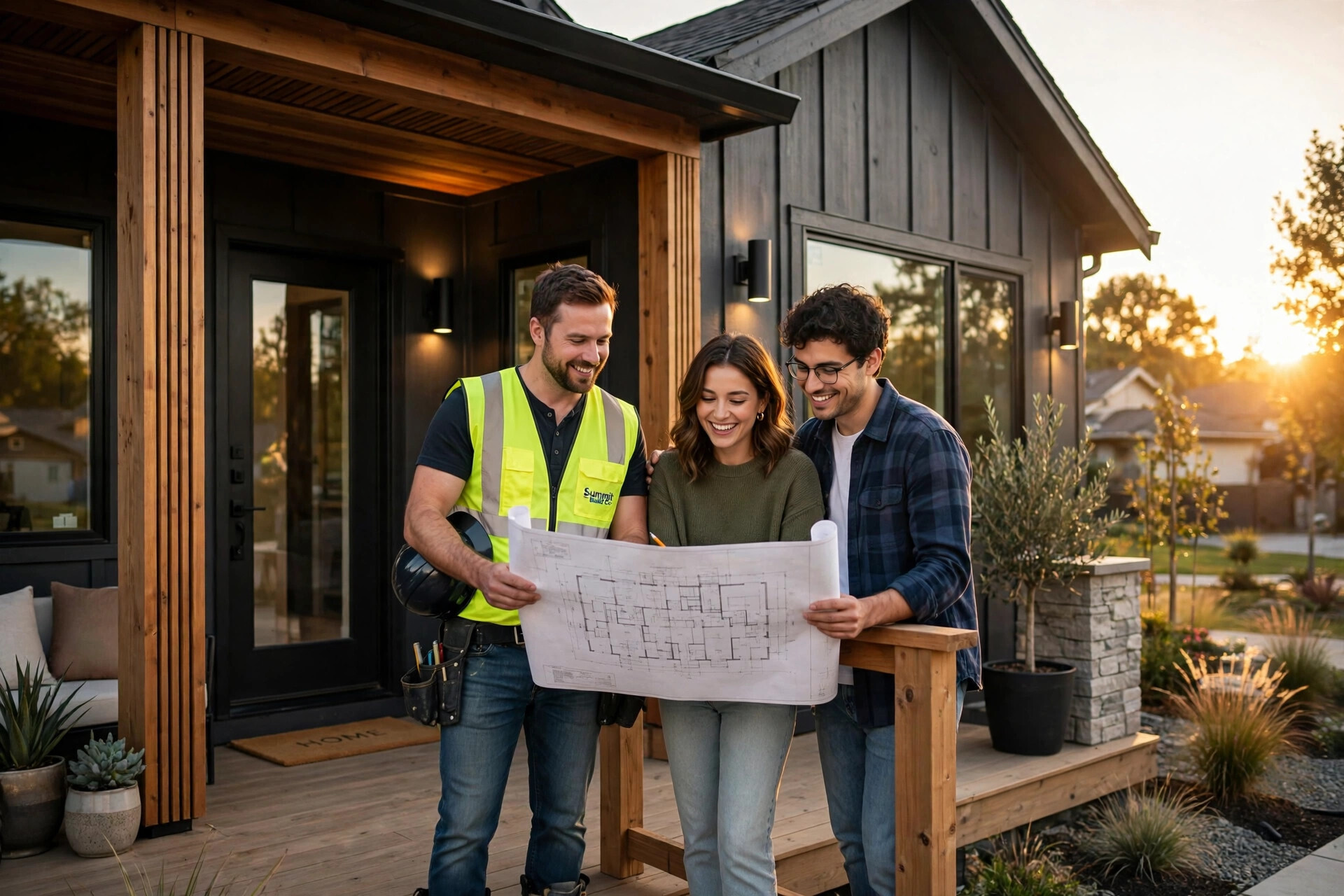
Why Custom-Home Clients Choose Builders They Find Online
A custom home is one of the largest purchases a family will ever make, and that makes trust the deciding factor. A client spending $50,000 on a renovation may take a chance on a builder with a thin online presence. A client spending $500,000 on a home built from scratch will not. They check your website, your Google Business Profile, your reviews, and your recent project photos before they ever pick up the phone. If any of those are missing or look careless, they quietly move on to the next builder on the list.
Referrals still matter enormously in home building, but today almost every referral is checked online first. A past client may praise you at dinner, and the new prospect will still search your name that same evening. Your online presence either confirms that recommendation or quietly cancels it.
Build a Website That Sells Homes, Not Just Services
Your website is your best salesperson, and it works twenty-four hours a day. But many builder websites only list services — "custom homes, additions, renovations" — without showing the finished result, the building process, or the reason to choose this company. A family planning a custom home wants to imagine living in the finished house, understand what working with you feels like, and feel confident enough to start a conversation.
Start with a clear homepage stating who you serve, where you build, and what kind of homes you specialize in, with strong photos of finished homes at the top — not stock images of houses you did not build. Add a short section explaining your process, from the first consultation and lot evaluation through design, construction, and the final walkthrough. Put a simple consultation request form and a phone number on every page; if a visitor has to hunt for a way to contact you, many will simply leave. For a related trade example of this structure, see our guide to digital marketing for general contractors.
Next, give every type of home you build its own page — modern farmhouses, luxury custom homes, energy-efficient builds — each with real photos and answers to the questions buyers ask most. These pages help Google show you for specific searches, and they help a prospect picture their own home in your portfolio.
Local SEO: Be the Builder Google Shows First
Local search engine optimization, or local SEO, is how your company appears when someone nearby searches for a builder. When a family types "custom home builder near me," Google shows a map pack of local businesses, followed by websites it considers most relevant and trustworthy. Getting into that map pack is one of the highest-value goals in builder marketing, because those searchers are usually ready to start a project soon.
The foundation is your Google Business Profile. Claim it, verify it, and complete every section: name, address, phone, website, service area, hours, and categories. Upload new project photos every week or two, post short updates about completed homes or homes under construction, and answer every review politely. Next, keep your business name, address, and phone number identical everywhere online, from your website to directories like Houzz, Angi, and the local home builders association. Then build location pages on your website for the main towns and suburbs you build in, each with real project photos from that area and a mention of the neighborhoods you serve.
Project Photos That Do the Selling for You
For a home builder, photos are not decoration. They are your portfolio, your proof, and often the deciding factor in whether a prospect calls. A family cannot inspect your framing, cabinetry, or finish work from a website description; they judge it from photos. Blurry phone pictures taken in bad light undersell excellent work, while clean, well-lit photos of finished homes make the same work look premium.
Photograph every home at three stages when possible: the lot and foundation, the home under construction, and the finished home. Foundation and framing photos show honest, professional workmanship; finished photos show the result a future client actually wants to buy. Hire a real estate photographer for finished homes if you can — the cost of one good shoot is tiny next to the value of a single custom-home contract.
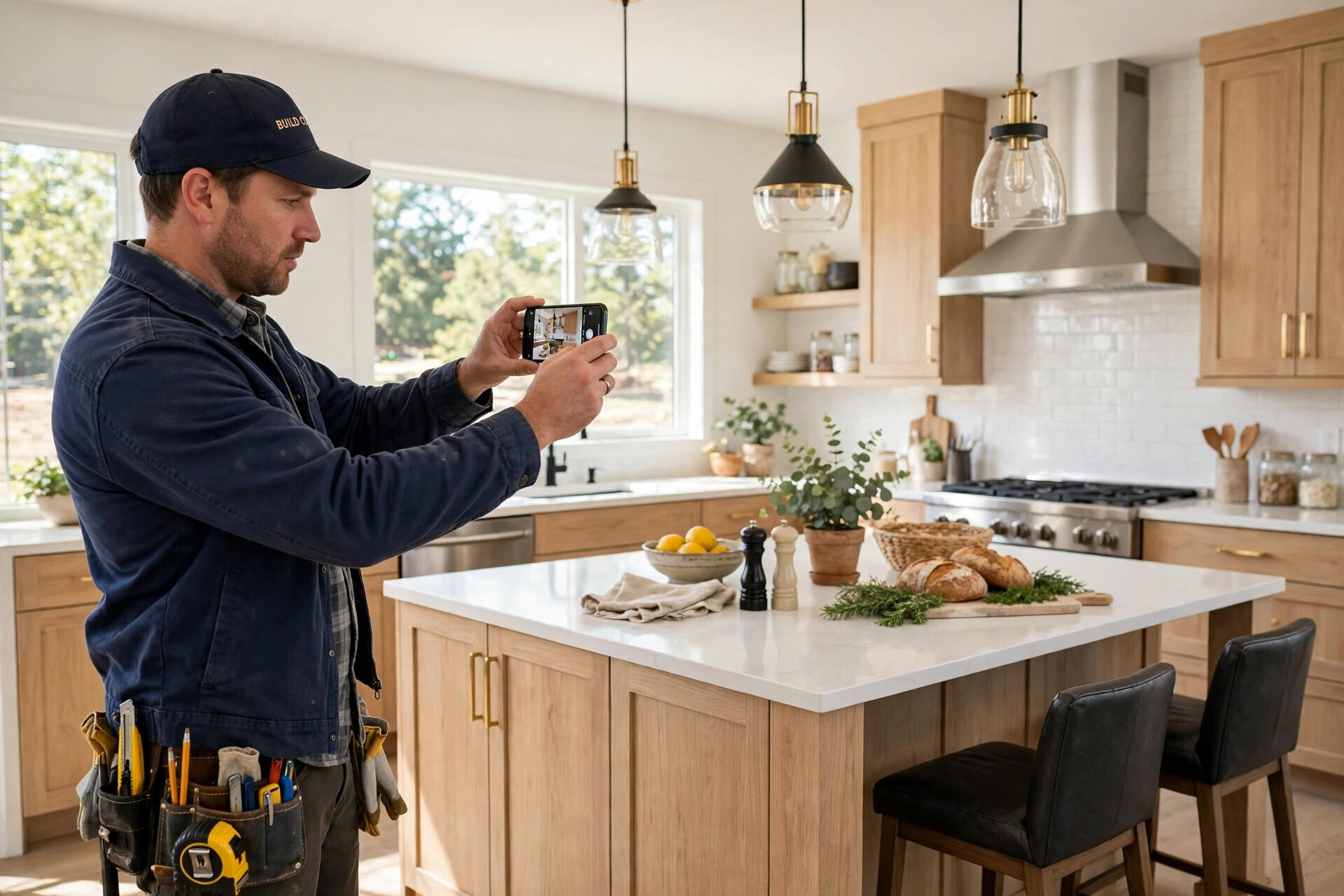
Then use those photos everywhere, not just in a gallery nobody visits. Put your best finished-home photo on the matching service page, share project stories on your Google profile and social media, and write a short caption for each home: what the family wanted, what you built, and what problem you solved. Home remodeling contractors use the same photo-first approach, as explained in our guide to digital marketing for home remodeling contractors — the trade is different, but showing real finished work matters just as much.
Video adds even more trust. A two-minute walkthrough of a finished home, filmed on a phone with steady hands and natural light, lets a prospect feel the space in a way photos cannot. Keep it simple: no script that sounds like an ad, just you walking through a home you are proud of.
Reviews and Reputation: Trust That Wins Custom Contracts
Reviews are the closest thing to a referral that a stranger can read. A builder with forty recent, detailed, positive reviews will win contracts over one with four old reviews, even at a higher price, because reviews reduce the client's fear of hiring the wrong company. Reviews also help your local SEO directly: Google favors businesses with more recent, positive reviews.
The secret to more reviews is simply asking, at the right moment, with an easy link. The best moment is the final walkthrough, when the family is happy and standing in their finished home. Thank them, ask if they would share a short review, and send a direct link to your Google review form by text or email that same day. When a negative review appears, respond calmly and publicly, without arguing: thank the reviewer, apologize, and invite them to contact you directly. Future clients read your response more carefully than the complaint itself.
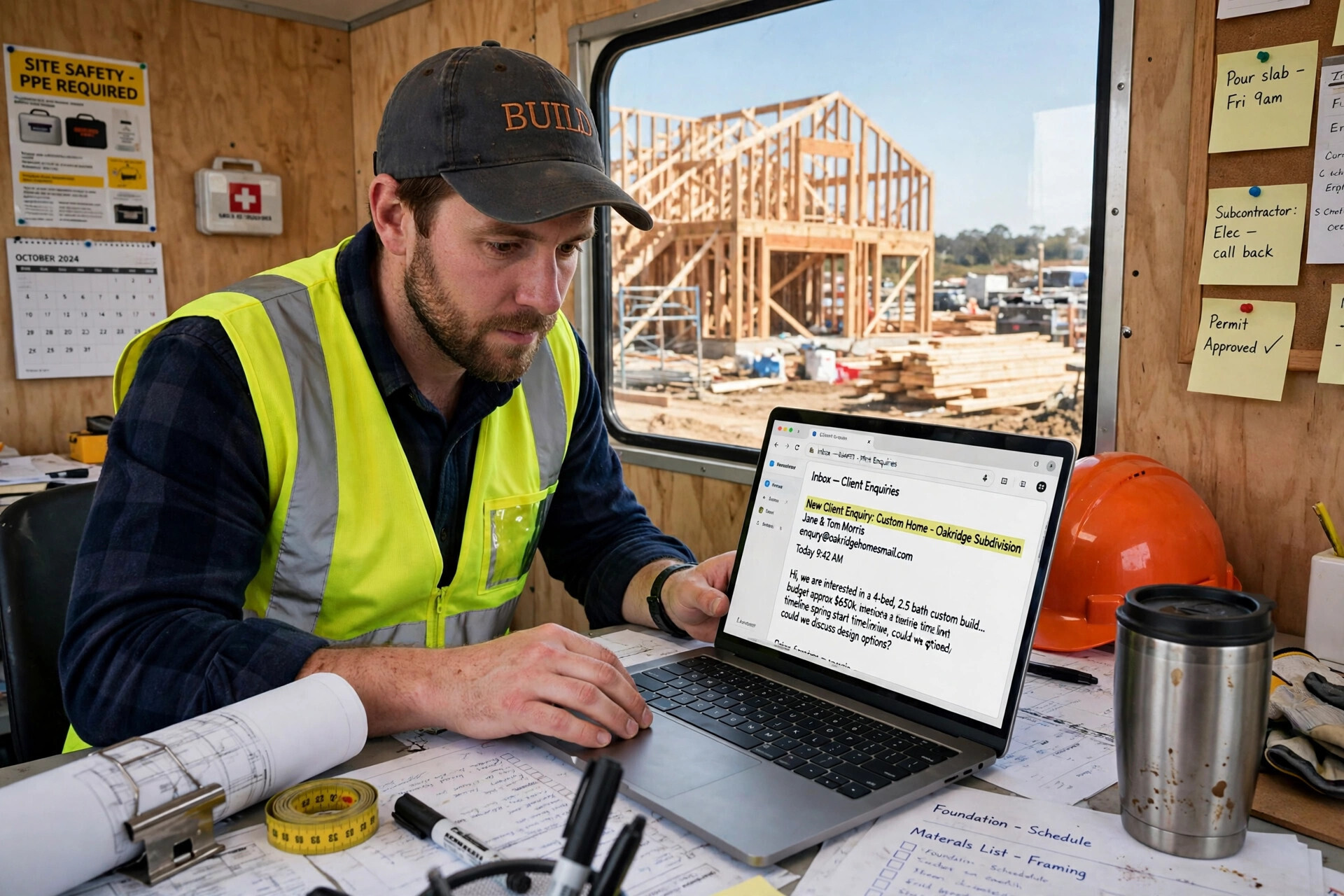
Turn Website Visitors Into Consultations
Traffic alone does not pay for crews and materials. What matters is how many visitors become genuine consultation requests, and how many of those become signed contracts. Keep the form short — name, phone, email, lot situation, budget range, and a brief description of the home they want — and offer a prominent phone number for people who prefer to talk. Then answer fast: set up instant notifications and assign one person to respond the same business day. Builders that reply within minutes win far more projects than those that reply in days.
Follow up without being pushy. Custom homes often take months to decide, so a short sequence — a thank-you message, a relevant finished-home photo, answers to common questions about timelines and costs, and one gentle check-in a few weeks later — keeps you in mind through a long decision. Many builders lose projects simply by going silent after the first conversation.
It also helps to know what a healthy marketing budget looks like before you scale spending. Our guide to digital marketing budgets for small businesses explains how to set an amount you can sustain for months rather than blowing it in one short burst.
Paid Ads and Social Media: Spend Where Home Buyers Are Looking
Organic marketing builds lasting visibility, but paid advertising can bring custom-home leads faster while it grows. Google Ads for high-intent searches — phrases like "custom home builder in [your town]" — puts you in front of people actively looking to build. Because these clicks can be expensive, send them to a dedicated landing page for that service, not your homepage, with relevant home photos and a clear consultation form.
Facebook and Instagram ads work differently: strong photos and short walkthrough videos of finished homes can reach families in your area who are thinking about building but have not searched yet. Target by location, and keep the ad honest — show homes you actually built.
Measure What Matters and Improve Every Month
Each month, check numbers tied to revenue: website visitors, consultation requests, consultations booked, and signed contracts. Free tools like Google Analytics and Search Console show where visitors come from and which pages bring them. Small monthly improvements — a better headline, a clearer form, a new project story, a fresh set of photos — compound into a system that steadily wins more custom-home projects.
Frequently Asked Questions
How much should a home builder spend on digital marketing?
Start with an amount you can sustain for at least six months rather than a large one-time spend. Begin with the free foundations — Google profile, reviews, photos, website — then add paid ads or content gradually as you see which channels bring genuine consultation requests.
How long does local SEO take to bring in custom-home projects?
Most builders see early movement — better map visibility, more profile views, more calls — within one to three months of fixing their Google profile, gathering reviews, and publishing service and location pages. Strong, stable rankings for competitive local searches usually take three to six months.
Should a home builder focus on one style of home or build everything?
Focus your marketing on the homes you most want and build best. A website aimed equally at starter homes, luxury estates, and commercial work often convinces nobody. Specializing your message — while still accepting other work — makes you memorable to the clients you want most.
Do social media followers actually lead to home-building contracts?
Followers alone rarely sign contracts, but a consistent local presence supports them. A prospect who has seen your finished homes and client stories several times before calling already trusts you more than a stranger would, and that trust matters enormously on a purchase this large.
What is the single most important marketing step for a new home builder?
Claim and complete your Google Business Profile, then build a review habit from your very first home. For a new builder with no track record, a complete profile with real photos and a growing set of honest reviews is the fastest way to look credible to strangers.
Conclusion
Winning more custom-home projects is rarely about one clever trick. It is about being easy to find, easy to trust, and easy to contact, and staying visible through a long decision until the family is ready to build. A strong website, a complete Google profile, real project photos, honest reviews, fast consultation follow-up, and helpful content work together as one system.
Start this week with three simple actions: update your Google Business Profile with fresh photos, ask your three happiest recent clients for reviews, and add your best finished-home photos to the service page that matters most to you. Custom-home projects go to the builders families can find and trust. Make sure that builder is you.




No comments:
Post a Comment