Choosing home care is one of the most emotional decisions a family will ever make. Nobody wakes up excited to search for a caregiver. They search because a parent has had a fall, a hospital discharge is coming up, or daily life has quietly become too hard to manage alone. In that moment, they are not looking for the cheapest agency or the flashiest website. They are looking for someone they can trust inside their parent's home.

That is why marketing for home care agencies is different from most other businesses. Families compare agencies carefully, read reviews word by word, and often decide within a few days. If your agency is hard to find or hard to trust at first glance, families will move on — even if your care is excellent.
The good news is that you do not need a huge advertising budget. You need to be visible where families search, make your services easy to understand, prove your trustworthiness, and follow up every enquiry quickly and kindly.
Start With Google Business Profile and Reviews
For most families, the journey starts on Google, with phrases like "home care near me" or "senior care at home." What they see first is usually the map pack — the three local businesses at the top — followed by reviews, photos, and a phone number. If your agency is not there, or looks weaker than those beside it, you may never get the call.
Start by claiming and fully completing your Google Business Profile: your exact agency name, real service area, local phone number, and the most accurate category, such as "home health care service." Write a clear description in plain language — who you help, what care you provide, and which towns you serve — and add real photos of your team at work, with permission, because stock photos alone do not build trust.
Reviews Are Your Strongest Sales Tool
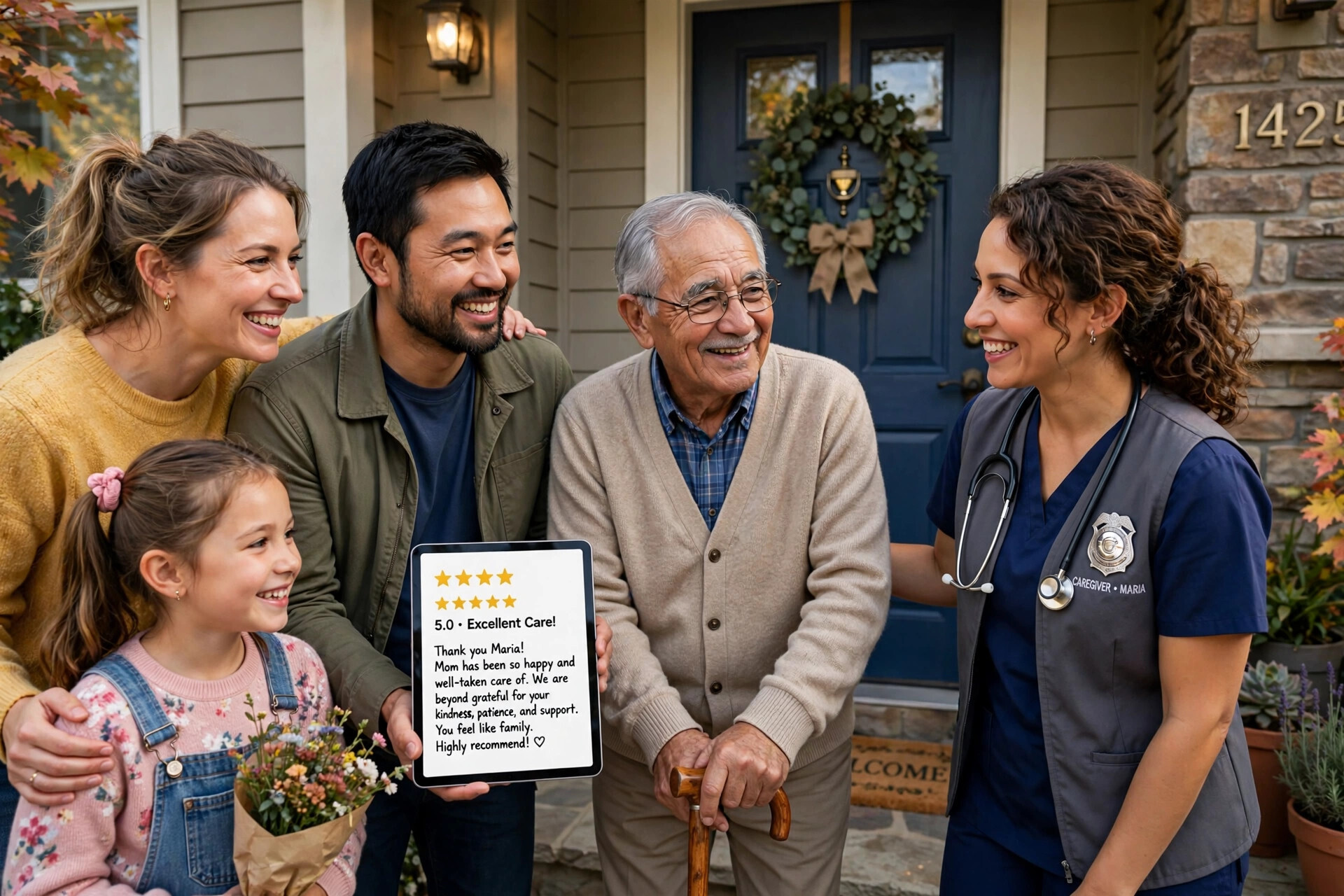
Reviews matter more in home care than in almost any other local service, because the stakes are so personal. Families read them for clues: Are caregivers kind? Do they turn up on time? Does the office answer the phone?
Make asking for reviews part of your normal process. When a family says they are happy, thank them and ask whether they would share a short Google review, sending a direct link so it takes less than a minute. Never offer payment for reviews or write them yourself — honest, specific reviews from real families beat dozens of vague five-star ratings.
Respond to every review, good or bad. Thank happy families, and reply to unhappy reviews calmly, without sharing private details — a thoughtful reply often impresses future families more than the review itself. See our guides on Google reviews for small businesses and our local SEO checklist for small businesses.
Build a Service Page for Each Type of Care
One of the biggest mistakes agencies make online is a single vague "Services" page listing everything in a few bullet points. Families do not search for "services." They search for a specific need: dementia care, post-hospital care, companionship, or personal care. Without a page speaking directly to that need, Google has little to show them.

Create a separate page for each main service. Each page should answer what a worried family member actually asks: What is included? Who is it right for? What does the first visit look like? How is care supervised? Use plain language, not medical jargon — a "Dementia Care at Home" page explaining routines and safety converts far better than one that simply says "memory care available."
Each service page should also be locally relevant: mention the towns you serve, because families search with place names. Add a clear next step — a phone number, a simple contact form, and an invitation to book a free consultation. Keep forms short: name, phone number, town, and type of care needed is enough.
Create Trust Content That Answers Real Family Questions
Families do not choose on price alone. They choose the agency that feels safest, most professional, and most understanding. Prove those qualities long before anyone picks up the phone, by answering the questions families are already asking, honestly and in detail.
Write helpful guides on topics such as how to choose an agency, what questions to ask before hiring a caregiver, how to pay for home care, and what happens during the first week of care. Explain your hiring process — background checks, training, supervision, and caregiver matching — plus what happens if a caregiver is sick and how families can reach you out of hours. Transparency removes fear, and fear is the main reason families delay calling.
Keep your tone warm, respectful, and honest, and never promise medical outcomes you cannot guarantee. Families can tell the difference between an agency that genuinely wants to help and one that is only chasing a sale.
Build Referral Partnerships With Hospitals, Doctors and Community Organisations
Online marketing brings in families who are already searching, but some of your best long-term clients come through trusted referrals. Hospital discharge planners, doctors, social workers, and senior centres all meet families at the exact moment they need home care — and will recommend an agency they know and trust first.
Start by introducing yourself properly. Visit local hospitals, clinics, and senior organisations in person where appropriate, and leave a simple information pack: who you serve, what services you provide, your service area, and one phone number for referrals. Follow up politely, and share useful material, such as a short guide for families preparing for discharge.
Make referring easy: one contact number for referrals, same-day responses, and updates — with the family's permission — on whether care has started. Professionals refer again to agencies that communicate well. One reliable referral relationship can bring clients for years.
Use Facebook and Community Marketing the Right Way
Families, especially adult children searching for care for a parent, spend a lot of time on Facebook and in local community groups. This is powerful for home care only if used with sensitivity: nobody wants aggressive sales posts about their parent's vulnerability. They respond to helpful, human content.
Share practical tips families genuinely need: how to make a bathroom safer, signs an older relative may need extra help, or questions to ask a care agency. Share team news and caregiver spotlights, and always get permission before posting any image of a client or their home.
Local Facebook groups can be valuable if you follow their rules and answer questions helpfully without turning every reply into an advert. Paid advertising can also work when targeted carefully to adults in your service area, but start small and test one message at a time.
Follow Up Every Enquiry Quickly, Kindly and Consistently
This is where many agencies lose clients they have already won. A family fills in a form, hears nothing for two days, and by the time you call back they have already booked with another agency. In home care, speed is often the deciding factor.
Aim to respond within one business hour, ideally within minutes during working hours, and make sure someone returns voicemails promptly. Set up an automatic reply confirming receipt, saying when they will hear from you, and giving a direct number for urgent needs.
When you speak to a family, listen first. Ask about their situation and what worries them most, explain the next step clearly — usually a free consultation or home assessment — and book it during that first conversation if possible. A short follow-up message confirming the appointment makes your agency feel organised and caring.
Not every enquiry becomes a client straight away. Keep in touch gently — a helpful email a few days later and a short check-in call the following week — without pressuring them. Many agencies win clients weeks later simply because they stayed in touch. Also make booking easy, as explained in our guide to online booking for small businesses.
Marketing for home care is ultimately about earning trust at every step: being easy to find, easy to understand, and easy to contact. Get those foundations right, keep your reviews growing, nurture referral partners, and follow up every enquiry with speed and kindness.
Frequently Asked Questions
How do families usually find a home care agency?
Most families start with a Google search, read reviews, and ask doctors, hospital staff, or friends for recommendations. That is why a complete Google Business Profile, strong reviews, and local referral relationships matter more than any single advert.
How long does it take for home care marketing to bring enquiries?
Faster follow-up and a completed Google profile can help within weeks; search rankings and reviews build over months. Treat marketing as a consistent habit, and measure enquiries and booked assessments, not only website visits.
Should a small home care agency spend money on paid advertising?
Paid advertising can help, but only after your website, reviews, and follow-up are solid. Start small, target your local area, and track how many clicks turn into real conversations.
What should a home care website include to win trust?
Clear service pages for each type of care, honest information about hiring and supervision, real reviews, real team photos, a local phone number, and a short, simple contact form. Families should be able to understand what you do and how to reach you within a minute of landing on your site.
How can an agency get more Google reviews without pressuring families?
Ask only satisfied families, make it easy with a direct link, and never pay for reviews or write them yourself. A steady stream of genuine reviews is far more credible than a sudden burst of suspicious ones.
Conclusion: Trust, Visibility and Speed Win Families
Winning more families is not about shouting louder than other agencies. It is about being there when a family searches, proving you can be trusted with their loved one, and responding with warmth and speed. Strengthen your Google presence, build a page for every service, answer families' real questions, and never let an enquiry wait.




No comments:
Post a Comment