Most people do not choose a moving company months in advance. They choose one in a hurry, usually after a lease is signed, a house sale closes, or a job relocation is confirmed. They search on their phone, scan the first few results, read a handful of reviews, and request quotes from two or three companies. The company that answers first, looks trustworthy, and makes quoting simple usually wins the job.
That is why marketing for moving companies is less about clever slogans and more about being easy to find, easy to trust, and easy to book. Whether you run one truck or a fleet, the same foundations decide how many inquiries turn into booked moves: a strong local presence, clear service pages, a fast quote process, real proof of good work, and steady follow-up.
1. Win Local Searches With Your Google Business Profile and Reviews
For local moves, your Google Business Profile is often your most important marketing asset. When someone searches for "movers near me" or "moving company in [city]", Google shows a map pack of nearby businesses before regular website results. If your profile is incomplete, outdated, or has few reviews, you may never appear in that shortlist.
Start by making sure your business name, address, phone number, website, and service area are accurate and consistent everywhere online. List every service you actually offer, such as residential, apartment, and office moving, packing, storage, and long-distance moving. Add your real working hours and upload recent photos of your trucks, crew, and completed jobs. A profile with no photos looks inactive, even if the company is busy every day.
Reviews are what turn a listing into a booking. Most customers will not call a mover with three reviews when a competitor has eighty and a higher rating. Ask at the right moment: right after the move is finished, while the customer is still happy in their new home. A short text message with a direct review link works far better than a request sent a week later. Thank every reviewer, and reply politely to negative reviews too, because future customers read those replies as closely as the reviews themselves. Common profile mistakes, such as wrong categories or missing services, quietly cost businesses calls every week, so it is worth learning about Google Business Profile mistakes and fixing them before you spend money on ads.
Reviews also feed your wider reputation. A steady stream of fresh reviews mentioning careful handling, on-time arrival, and fair pricing tells Google and customers that your service is reliable. A few genuine reviews every week beats twenty in one day followed by months of silence.
2. Build Service and Route Pages That Match How Customers Search
A single homepage saying "we move homes and offices" is not enough to rank well or convert visitors. Customers search with specifics: "apartment movers downtown", "piano movers", "office relocation", or "long-distance movers from Chicago to Dallas". Each of those searches deserves its own clear page.
Create a separate page for each main service and each main area or route you serve. A local service page should explain what is included, who it suits, and how pricing works. A route page should state the cities covered, typical timing, how belongings are protected on a longer trip, and whether storage is available at either end. Use real local details — neighbourhoods served, building types handled, parking or elevator challenges you solve — because that specificity separates a page that ranks from one that reads like every other mover's website.
Each page needs one clear call to action: request a free quote, call, or check availability for a date. Do not bury the quote button below a wall of text, and do not make visitors hunt for your phone number. On mobile, where most moving searches happen, the phone number and quote form should be visible without scrolling far. For turning visitors into enquiries, read this guide to lead generation for small businesses.
What every service page should answer
Before you publish a page, check that it answers the questions a customer is already asking: What do you move? Which areas do you cover? How is the price calculated? What happens if something is damaged? How far ahead should I book? Pages that answer those questions honestly build trust faster than pages full of superlatives.
3. Make the Quote-Request Process Fast, Simple, and Human
Speed wins moving jobs. A customer who requests three quotes will often book the first company that replies with a clear, believable price and a friendly tone. If your reply takes two days, the job is usually gone.
Keep your quote form short. Ask for the move date, origin and destination, home size or number of rooms, and a phone number or email address. That is enough to start a conversation. Every extra field — detailed inventories, exact addresses, preferred arrival hour — can wait until you speak to the customer. Long forms feel like homework, and many visitors abandon them halfway through. Offer a phone option just as prominently as the form, because many customers would rather talk to a person.
When you reply, give a realistic range or a clear next step, not a vague promise. Explain what the price includes, such as labour, truck, fuel, blankets, and basic protection, and what costs extra, such as packing materials, long carries, or stairs. A quote that hides extras looks cheap until moving day, when it creates arguments and bad reviews. A transparent quote, even if not the lowest, earns more bookings over time because it feels safe.
Follow up every unbooked quote at least twice: once the next day, and once a few days later. Confirm the date is still available, answer one question they asked, and offer a ten-minute call to finalise details. Many movers lose jobs simply because nobody followed up, so track every quote in a simple spreadsheet or booking system. For more on turning reviews and trust into enquiries, see this practical guide to Google reviews for small businesses.

4. Show Your Crews With Photos and Video Customers Can Believe
Moving is a trust business. Customers hand strangers the keys to their home and everything they own. Stock photos do not build that trust. Real photos and short videos of your actual crew do.
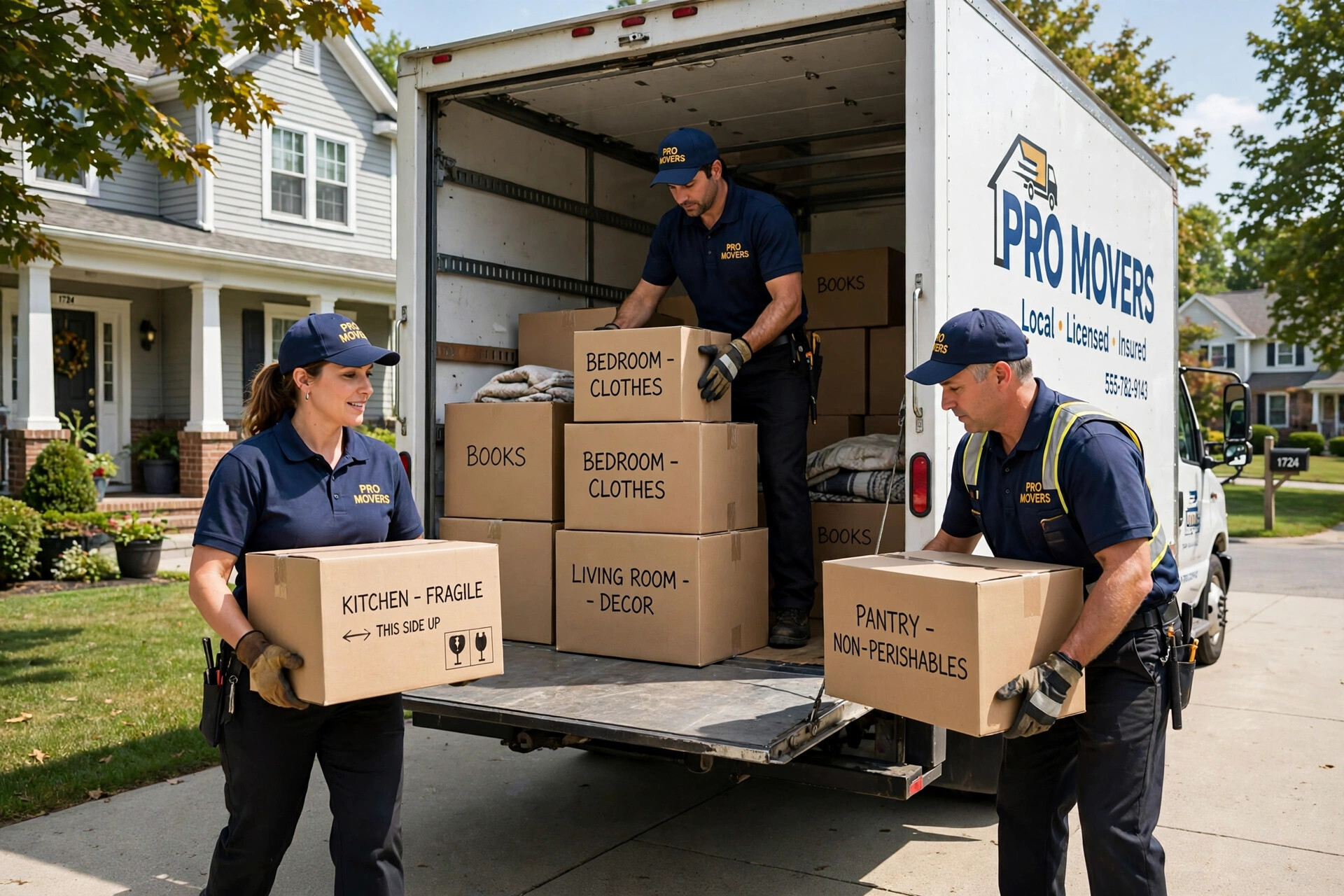
Photograph your team at work: wrapping furniture, loading a truck carefully, and protecting floors and door frames. Show the truck, equipment, and uniforms, because customers look for signs of a professional operation. Short vertical videos work especially well: a thirty-second clip of a crew working smoothly or a before-and-after room setup tells a story faster than any paragraph.
Always ask permission before filming inside a customer's home or using their photo. You do not need expensive production: a clean phone video, good daylight, and a crew member explaining what they are doing beats a polished advertisement that looks like every other company's. Post one new photo or video a week to keep your profile looking active.
5. Plan for Seasons and Build Referrals That Fill Quiet Weeks
Moving demand is seasonal. Summer weekends and month-end dates are busy, while mid-winter weekdays can be quiet. Smart movers market differently in each season instead of hoping quiet weeks fill themselves.
During peak season, focus on early booking: promote advance booking and publish summer moving checklists. During quieter months, offer genuinely useful incentives rather than desperate discounts: free wardrobe boxes, discounted packing, flexible midweek pricing, or a storage bundle for customers between homes. Promote these offers to your existing audience first, because they cost far less than winning a brand-new customer through advertising.
Referrals are the cheapest bookings a moving company can get. Build partnerships with the people who meet your customers first: estate agents, letting agents, property managers, storage facilities, and apartment building managers. Offer a simple referral arrangement and thank them when a referral books. Past customers are equally valuable: a thank-you message after the move, a reminder a year later when a lease renewal may approach, and a small incentive for recommending a friend can produce steady repeat and referred work.
6. Follow Up After the Move and Turn One Job Into the Next
Most moving companies stop marketing the moment the truck is unloaded. That is a missed opportunity. The days after a move are when the customer is most willing to leave a review, recommend you, or book an extra service such as unpacking or storage.
Send a brief thank-you message within a day of the move, check that everything arrived safely, and include the review link. A week later, share one useful settling-in tip rather than another sales message. Keep the customer on a light-touch list: a seasonal reminder and a moving-tip email a few times a year. If it is genuinely helpful and infrequent, it is staying in touch, not spam.
Track what works. Each month, note where bookings came from: Google searches, reviews, referrals, repeat customers, social media, or paid ads. If one channel consistently produces booked moves at a reasonable cost, put more effort there; if another produces many enquiries but few bookings, fix the follow-up or quote process first. Marketing for movers is a system: visibility brings the enquiry, trust wins the quote, speed wins the booking, and good service creates the review and referral that brings the next customer.

Frequently Asked Questions
How far in advance should customers book a moving company?
For local moves, two to four weeks is usually enough, but summer weekends and month-end dates book up faster, so four to six weeks is safer. For long-distance moves, aim for six to eight weeks where possible.
What is the best way for a small moving company to get more reviews?
Ask right after a successful move, when satisfaction is highest. Send a short message with a direct link to your Google review page, noting it takes less than a minute. Respond to every review, and fix the small problems customers mention.
Should a moving company run paid ads or focus on local SEO first?
Start with the free foundations: a complete Google Business Profile, strong reviews, and clear service pages. Paid ads work best once those exist, because they send visitors to a profile and website that can actually convert them. Without reviews and a fast quote process, ad clicks are often wasted.
How can movers get more long-distance jobs?
Publish dedicated route pages for the corridors you actually serve, explain timing and protection clearly, and show proof of long-distance experience through photos and reviews from customers on those routes. Partner with storage providers and estate agents at both ends of popular routes, and answer enquiries quickly.
What is the most cost-effective marketing for a moving company?
Referrals and repeat customers usually cost the least and convert the best. A simple system — asking for reviews after every move, staying in touch with past customers, and building partnerships with estate agents and storage facilities — often outperforms expensive advertising.
Conclusion
Booking more moves does not require a huge advertising budget. It requires being visible where customers search, looking trustworthy when they find you, answering quickly with a clear quote, and proving your quality with real photos, reviews, and referrals. Start with your Google Business Profile and review habit, build one strong page for each service and route, shorten your quote form, and follow up every enquiry and past customer. Do those things consistently, and the bookings will follow — in busy season and quiet weeks alike.




No comments:
Post a Comment